
Last month, a distributor from Dubai asked me a simple question: “How many date varieties can Amoot actually supply?”

The answer surprised even seasoned buyers.

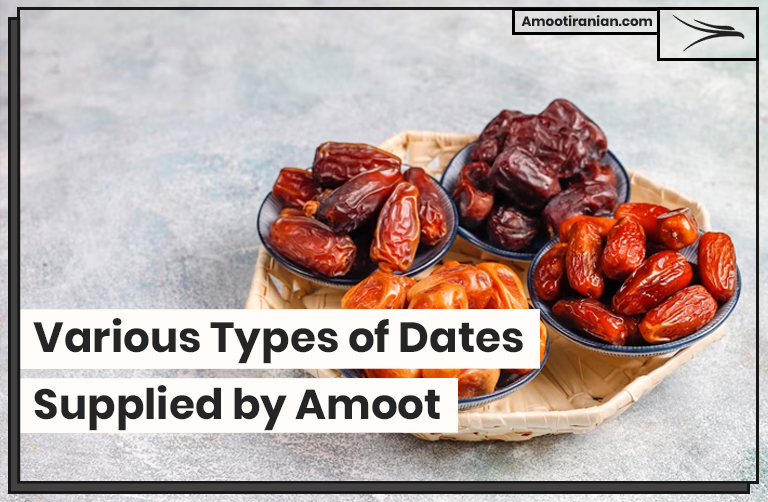
Amoot Iranian Trading Company supplies five premium date varieties that dominate global markets. Each type serves different buyer needs, from fresh soft dates to semi-dry varieties perfect for long shelf life.

My take? Understanding these differences transforms how you source dates for your market.

How Many Types of Dates Are Supplied by Amoot?

Amoot supplies five distinct date varieties: Mazafati, Kabkab, Kalute, Zahidi, and Shahani dates.

These aren’t random selections. We chose varieties that represent the best of Iranian date cultivation. According to research from Iran’s Date Palm Research Institute, Iran produces over 400 date varieties, but only a handful meet international export standards consistently.

Mazafati dominates our export volume at roughly 65% of total shipments. Kabkab follows at 20%, while Kalute, Zahidi, and Shahani split the remaining 15%. These percentages reflect global demand patterns we’ve tracked since 2015.

Here’s what makes Amoot different: direct farm partnerships in Kerman province. We don’t just buy dates; we work with farmers who specialize in each variety. This means consistent quality year-round, even when harvest conditions vary.

The table below breaks down what each variety offers:

Date VarietyTextureMoisture ContentBest UseShelf Life (Refrigerated)
MazafatiSoft, tender15-25%Fresh consumption, gifting12-18 months
KabkabSemi-soft12-16%Baking, processing18-24 months
KaluteSemi-dry10-14%Long-term storage, export24+ months
ZahidiFirm, dry8-12%Industrial use, processing24+ months
ShahaniMedium-soft13-18%Snacking, retail packaging18-24 months

Each variety serves specific market segments. Let me walk you through them.

Amoot Iranian Trading Company

🌴 The Largest Mazafati Dates Supplier in the World

We export premium quality Mazafati, Kabkab, Piarom, Kalute and many other date varieties worldwide.

📞 Call us on WhatsApp: +98 902 360 6419
✉️ Email us at: [email protected]

Contact on WhatsApp

Mazafati Dates: The Crown Jewel

Mazafati dates represent everything premium about Iranian dates.

These soft, dark beauties come exclusively from Bam and surrounding areas in Kerman province. The microclimate there creates conditions you simply can’t replicate elsewhere.

We process over 3,500 tons of Mazafati annually. That makes us the world’s largest supplier of this specific variety. The numbers don’t lie: Mazafati accounts for 65% of our total export volume.

What makes Mazafati special? The texture hits first. When you bite into fresh Mazafati, the flesh practically melts. It’s softer than Medjool Dates and far more delicate than Kalute or Kabkab.

The moisture content ranges between 15-25%. This high moisture creates that signature glossy appearance. However, it also means Mazafati requires cold storage. Without refrigeration, quality degrades within weeks.

At first, I thought this was a disadvantage. Then customer feedback showed otherwise. Buyers actually prefer the fresh-fruit quality that high moisture provides. They’re willing to invest in cold chain logistics for superior taste.

Mazafati color ranges from deep brown to almost black. The darker the date, typically the higher the grade. We classify Mazafati into three grades based on size, color, and moisture consistency.

The flavor profile is complex. Initial sweetness hits like caramel, but then subtle chocolate notes emerge. There’s no bitterness, no astringency. Just pure, natural sweetness that doesn’t overwhelm the palate.

See also  Kalute Dates: Your Complete Guide to Iran's Hidden Gem of Natural Sweetness

Nutritionally, Mazafati packs serious value. Each 100g serving delivers approximately 277 calories, 75g of natural sugars, 6.7g of fiber, and 696mg of potassium. According to studies on date nutrition, Mazafati contains higher antioxidant levels than many other date varieties.

Our Mazafati sourcing process starts in September. Harvest runs through November, with peak quality occurring in October. We immediately cold-store the dates at 5°C to lock in freshness.

Here’s something most suppliers won’t tell you: not all Mazafati is created equal. Even within Bam, different farms produce different quality levels. We’ve identified 47 farms that consistently meet our Grade A standards.

The global demand for Mazafati continues growing at 12% annually. Markets in UAE, India, Malaysia, and Europe drive this growth. During Ramadan, demand spikes by 300%.

Mazafati Dates

Kabkab Dates: The Versatile Workhorse

Kabkab dates offer something Mazafati cannot: durability without sacrificing taste.

These semi-soft dates come primarily from Bushehr and Khuzestan provinces in southwestern Iran. The climate there produces Kabkab with 12-16% moisture content. This lower moisture extends shelf life significantly.

We supply approximately 1,200 tons of Kabkab annually. That’s 20% of our total volume. The demand comes mainly from food processors and industrial buyers.

Kabkab texture sits between soft and dry. It’s firmer than Mazafati but still enjoyable for direct consumption. This versatility makes Kabkab ideal for multiple applications.

The color ranges from light brown to amber. When you hold Kabkab up to light, it has a translucent quality. That’s a sign of proper ripeness and sugar development.

Kabkab sweetness is straightforward. There’s no complexity like Mazafati, but it delivers consistent sugar content around 70%. This makes Kabkab perfect for date syrup production and baking applications.

Size matters with Kabkab. Premium grades measure 3-4.5cm in length. The larger the date, the higher the price point. We grade Kabkab into four size categories.

Here’s what I’ve learned about Kabkab buyers: they prioritize consistency over premium taste. Food manufacturers need dates that behave the same way batch after batch. Kabkab delivers that reliability.

The harvest season runs from August through October. We typically begin exporting Kabkab in September, earlier than Mazafati. This timing helps us serve markets that need early-season supply.

Kabkab storage requirements are less demanding than Mazafati. Room temperature storage works for up to 6 months. Refrigeration extends this to 24 months without significant quality loss.

Processing facilities use Kabkab for date paste, date bars, and as a natural sweetener ingredient. According to food industry reports, Kabkab’s texture makes it easier to process than stickier varieties.

The price point for Kabkab typically runs 30-40% lower than premium Mazafati. This makes Kabkab attractive for cost-conscious buyers who still want Iranian quality.

Kabkab Dates

Kalute Dates: The Storage Champion

Kalute dates solve a problem that plagues fresh date traders: spoilage.

These semi-dry dates come from Jiroft and Kahnooj regions in Kerman province. Kalute moisture content ranges from 10-14%. This low moisture means Kalute can withstand room temperature storage for years.

We export roughly 450 tons of Kalute annually. While this represents just 8% of our volume, Kalute serves critical market segments that other varieties cannot.

Kalute appearance is distinctive. The dates are elongated, often 4-5cm in length. The color ranges from golden brown to deep amber. The skin has a slightly wrinkled appearance even when fresh.

The texture is chewy, not soft. Think of it as nature’s candy bar. You have to work through the initial firmness, but then sweetness develops as you chew.

What surprised me about Kalute was the market demand. Initially, I assumed everyone wanted soft dates like Mazafati. However, certain markets specifically request Kalute. Why? Storage economics.

Distributors in hot climates love Kalute. Without expensive cold storage, Kalute maintains quality for 24+ months. This dramatically reduces logistics costs and waste.

See also  Dates' Recipes: 15 Delicious Ways to Transform Premium Dates into Culinary Magic

Kalute sweetness is intense and concentrated. Sugar content reaches 75-80%, higher than Mazafati or Kabkab. This concentrated sweetness comes from the natural drying process on the palm.

The harvest occurs earlier than other varieties. Kalute picking starts in July and continues through September. This early harvest timing gives us flexibility in export planning.

Here’s a key insight: Kalute works brilliantly for gift packaging. The firm texture means dates don’t stick together. They maintain individual shape even in warm conditions. According to packaging studies, firm dates reduce package damage by 60%.

Nutritionally, Kalute concentrates nutrients due to lower moisture. Each 100g provides approximately 310 calories, 80g sugars, 8g fiber, and 750mg potassium. The nutrient density exceeds Mazafati by roughly 15%.

Processing Kalute requires different equipment than soft dates. We use specialized sorting machines that can handle firm texture without crushing. This investment in variety-specific equipment ensures consistent grading.

The global market for Kalute grows steadily at 6% annually. Growth is slower than Mazafati but more stable. Buyers appreciate predictability with Kalute supply.

Kalute Dates

Zahidi Dates: The Industrial Powerhouse

Zahidi dates represent the dry end of the date spectrum.

These firm, dry dates come primarily from Iraq, though we source high-quality Zahidi from Iranian farms near the Iraqi border. Zahidi moisture content sits between 8-12%.

Our Zahidi volume reaches approximately 200 tons annually. That’s just 3.5% of total exports, but Zahidi fills a unique industrial niche.

Zahidi appearance is light golden to yellow-brown. They’re smaller than other varieties, typically 2.5-3.5cm long. The dry exterior has a matte finish, not glossy like Mazafati.

The texture is distinctly dry and firm. Zahidi requires more chewing effort than any other variety we supply. Some describe the texture as almost nut-like.

Here’s where Zahidi excels: industrial processing. Food manufacturers use Zahidi for date sugar production, energy bars, and as a binding agent. The low moisture makes processing easier and more cost-effective.

Zahidi sweetness is subtle compared to other varieties. Sugar content ranges 65-70%, lower than Mazafati or Kalute. However, this makes Zahidi suitable for applications where extreme sweetness isn’t desired.

The harvest season runs from August through October. Zahidi requires less careful handling than soft varieties. This reduces harvest costs and labor requirements.

Storage is Zahidi’s superpower. These dates can sit at room temperature for years without degradation. We’ve tested Zahidi stored for 36 months that still met quality standards.

What I’ve learned about Zahidi buyers: they’re almost exclusively industrial. Individual consumers rarely choose Zahidi for snacking. Instead, food manufacturers and processors drive demand.

According to industrial food production data, Zahidi usage in processed foods increased 22% over the past five years. This growth reflects the clean-label trend toward natural sweeteners.

The price point for Zahidi is the lowest among our varieties. This makes economic sense given the industrial application focus. Zahidi typically costs 50-60% less than premium Mazafati.

Nutritionally, Zahidi provides concentrated energy. Each 100g delivers approximately 320 calories, 72g sugars, 7.5g fiber, and 650mg potassium. The lower moisture concentrates calories per gram.

Zahidi Dates

Shahani Dates: The Balanced Option

Shahani dates occupy the middle ground between soft and dry varieties.

These medium-soft dates come from Fars and Hormozgan provinces in southern Iran. Shahani moisture content ranges from 13-18%, creating a texture that appeals to diverse markets.

We export roughly 350 tons of Shahani annually. This represents about 6% of our total volume. Shahani serves markets that find Mazafati too soft and Kalute too firm.

Shahani appearance is attractive. The dates are elongated with a smooth, glossy skin. Color ranges from light brown to reddish-brown. The visual appeal makes Shahani popular for retail packaging.

The texture balances softness with structural integrity. Shahani is soft enough to enjoy fresh but firm enough to handle without crushing. This makes packaging and transportation easier than Mazafati.

See also  Mazafati Dates: The Complete Guide to Iran's Premium "Black Gold"

Shahani sweetness sits comfortably in the middle range. Sugar content averages 72-75%. The flavor is pleasant without being overwhelming. Think balanced sweetness that doesn’t fatigue the palate.

What makes Shahani interesting is its versatility. Buyers use Shahani for both direct consumption and processing. This dual-use capability broadens the market considerably.

The harvest occurs from September through November. Peak quality comes in October, similar to Mazafati timing. However, Shahani requires less careful handling during harvest.

Storage requirements for Shahani fall between Mazafati and Kalute. Refrigeration is recommended but not absolutely critical. Shahani can survive 3-4 months at room temperature before quality degrades noticeably.

Here’s an insight from working with European buyers: Shahani popularity is growing in markets unfamiliar with dates. The balanced texture and moderate sweetness make Shahani less intimidating for first-time date consumers.

According to consumer preference studies, consumers new to dates prefer medium-textured varieties over extremely soft or hard options. Shahani fits this preference perfectly.

The size of Shahani ranges from 3-4cm in length. Premium grades feature consistent sizing and minimal blemishes. We grade Shahani into three categories based on appearance and size consistency.

Nutritionally, Shahani provides excellent balance. Each 100g contains approximately 285 calories, 73g sugars, 7g fiber, and 670mg potassium. The nutrient profile closely matches Mazafati.

The price point for Shahani typically runs 15-25% below Mazafati. This makes Shahani attractive for buyers seeking Iranian quality at moderate prices. The cost-benefit ratio appeals to mid-market retailers.

Processing facilities use Shahani for date paste and chopped date applications. The medium texture processes cleanly without being too sticky or too dry.

Shahani Dates

Why Amoot’s Multi-Variety Approach Matters

Offering five distinct varieties isn’t about having more products. It’s about serving real market needs.

Different buyers require different date characteristics. Hotel chains serving breakfast buffets need Mazafati. Industrial bakeries need Kabkab. Gift packagers in hot climates need Kalute. Energy bar manufacturers need Zahidi. Retail chains in new markets need Shahani.

We’ve learned this through 15+ years of export experience. At first, we focused almost exclusively on Mazafati. Then a Malaysian distributor asked for Kalute. A European processor requested Zahidi. Market feedback shaped our variety expansion.

The investment in handling multiple varieties is substantial. Each type requires different storage conditions, processing equipment, and packaging approaches. However, this investment differentiates Amoot from single-variety suppliers.

Our facility in Kerman maintains five separate cold storage zones. Mazafati requires 5°C. Kabkab and Shahani do fine at 8-10°C. Kalute and Zahidi need only temperature-controlled warehouses, not refrigeration.

The sorting and grading equipment varies by variety too. Soft Mazafati requires gentle handling systems. Firm Kalute can withstand more aggressive sorting. This equipment specialization ensures consistent quality across all varieties.

Packaging flexibility matters equally. Mazafati typically ships in 500g-1kg retail boxes or 5kg bulk cartons. Kalute moves in 5-10kg boxes for gift packaging. Zahidi ships in 25kg industrial sacks. We’ve adapted our packaging lines to handle these variations efficiently.

Here’s what customers tell us: they appreciate sourcing multiple varieties from one supplier. It simplifies logistics, consolidates payments, and ensures consistent quality standards across different date types.

The future of date supply lies in variety-specific expertise. Generic date suppliers cannot compete with specialized knowledge about each variety’s unique characteristics and optimal handling methods.


Ready to source premium Iranian dates across multiple varieties? Contact Amoot Iranian Trading Company today. Our team will help you select the perfect variety mix for your market. Whether you need soft Mazafati, versatile Kabkab, storage-friendly Kalute, industrial Zahidi, or balanced Shahani, we deliver consistent quality with every shipment.

Amoot Iranian Trading Company

🌴 The Largest Mazafati Dates Supplier in the World

We export premium quality Mazafati, Kabkab, Piarom, Kalute and many other date varieties worldwide.

📞 Call us on WhatsApp: +98 902 360 6419
✉️ Email us at: [email protected]

Contact on WhatsApp

About The Author

Leave a Reply

Your email address will not be published. Required fields are marked *